
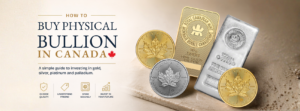
Investing in physical precious metals can feel complicated when you’re just getting started. Gold or silver? Coins or bars? How much should you buy? And perhaps most importantly, where should you buy it?
The good news is that buying physical bullion in Canada can be relatively straightforward when you understand the process.
Whether you’re considering gold, silver, platinum or palladium, here are the key things to know before making your first purchase.
1. Understand What Bullion Is
Bullion refers to precious metals valued primarily for their metal content rather than their collectible value.
Physical bullion is commonly available as coins and bars in a variety of weights and sizes.
For example, the Royal Canadian Mint produces Gold and Silver Maple Leaf coins with a purity of 99.99%, along with a variety of other bullion products.
For investors, the choice between coins and bars often comes down to investment size, flexibility and premiums.
2. Choose the Precious Metal That Fits Your Goals
Before purchasing bullion, consider what role precious metals will play in your portfolio.
Gold is widely used as a long-term store of value and portfolio diversifier.
Silver offers a lower entry point and combines investment demand with significant industrial applications.
Platinum and palladium can provide additional diversification and have important industrial uses.
You don’t necessarily need to choose only one. The right allocation depends on your objectives, investment horizon and overall portfolio.
3. Understand Spot Price and Premiums
One of the most important concepts when buying bullion is the difference between the spot price and the price you actually pay.
Spot price represents the current market price of the underlying precious metal. Because global precious-metals markets move continuously, bullion prices can change throughout the trading day.
The price of a physical coin or bar generally includes a premium above spot, reflecting factors such as fabrication, transportation and distribution. The Royal Canadian Mint recommends comparing dealer pricing with the current spot price when evaluating a purchase.
This is why comparing two bullion products based solely on their total price doesn’t always tell the whole story.
4. Choose Coins or Bars
Both can provide direct exposure to physical precious metals, but they serve slightly different needs.
Coins can offer greater flexibility when selling smaller portions of your holdings, although smaller products generally carry higher premiums.
Bars are available in larger sizes and can offer lower premiums per ounce, making them attractive for investors purchasing larger quantities.
The Royal Canadian Mint similarly notes that bars are commonly selected by institutions, corporations and investors purchasing larger quantities, while coins can provide greater flexibility when selling portions of an investment.
5. Buy From an Established Bullion Dealer
Who you buy from matters just as much as what you buy.
When choosing a precious-metals dealer, consider:
- Transparent and competitive pricing
- Product authenticity and sourcing
- Experience in the precious-metals industry
- Clear buying and selling procedures
- Delivery and storage options
- Access to knowledgeable professionals
Worldwide Precious Metals has been helping Canadian investors navigate the physical precious-metals market since 2002, with access to gold, silver, platinum and palladium bullion.
6. Understand How Precious Metals Are Taxed in Canada
Not every precious-metal product receives the same GST/HST treatment.
Under Canadian tax rules, qualifying investment-grade precious metals generally require a minimum purity of 99.5% for gold and platinum and 99.9% for silver. Qualifying supplies are generally treated as exempt financial services for GST/HST purposes.
Product type, purity and circumstances matter, so investors should verify the treatment of the specific bullion they’re purchasing and consult a tax professional when necessary.
7. Decide How You Will Store Your Bullion
Once you’ve purchased physical bullion, you’ll need to decide where it will be held.
Depending on your needs, options can include personal possession or professional secure storage.
Before purchasing, consider security, insurance, accessibility and the costs associated with your preferred storage method.
Storage shouldn’t be an afterthought—it should be part of your bullion strategy from the beginning.
8. Think About Selling Before You Buy
A good bullion strategy doesn’t only consider the purchase.
Ask your dealer:
How would I sell my bullion in the future?
Understanding the dealer’s buyback process, pricing, and liquidity can help you make a more informed decision today.
Ready to Buy Physical Bullion in Canada?
Buying physical precious metals doesn’t need to be complicated.
At Worldwide Precious Metals, our team can help you understand your options, compare available bullion products and determine an approach that aligns with your investment goals.
Whether you’re considering gold, silver, platinum or palladium, professional guidance can help you make a more informed decision.